SEO-scores begrijpen
Leer hoe het realtime SEO-scoresysteem werkt, wat elke controle meet en hoe je je score verbetert met auto-fixes.
Bijgewerkt op Jun 3, 2026
Elke blogpost in Nolorem heeft een SEO-score die realtime wordt bijgewerkt terwijl je bewerkt. De score loopt van 0 tot 100 en beoordeelt je post op hoe goed hij is geoptimaliseerd voor zoekmachines.
Waar je hem vindt
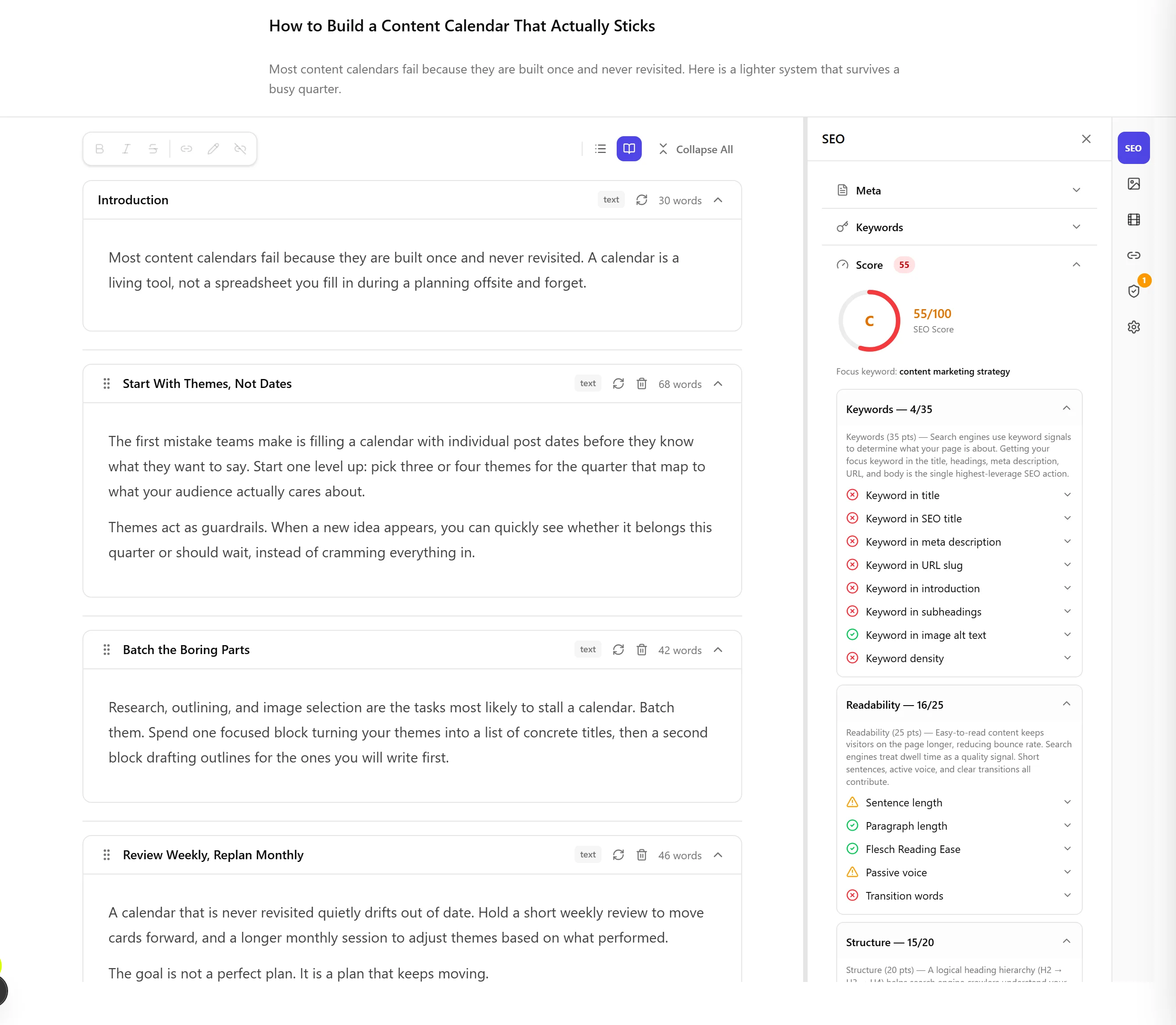
Open een post in de editor en zoek naar het SEO-paneel aan de rechterkant. Het paneel toont je totaalscore, lettercijfer en een uitsplitsing van afzonderlijke controles, gegroepeerd per categorie.
Scorecategorieën
Het budget van 100 punten is verdeeld over vier gebieden:
- Keyword (35 punten, 8 controles): keyworddichtheid, plaatsing in titel, koppen, eerste alinea, meta-omschrijving, URL-slug, alt-tekst van afbeeldingen en verdeling over secties
- Readability (25 punten, 5 controles): variatie in zinslengte, verhouding lijdende vorm, alinealengte, overgangswoorden en leesniveau
- Structure (20 punten, 4 controles): kophiërarchie, aantal koppen, contentlengte en interne links
- Technical (20 punten, 4 controles): lengte meta-titel, lengte meta-omschrijving, alt-tekst van afbeeldingen en formaat van de URL-slug
Lettercijfers
| Score | Cijfer |
|---|---|
| 80-100 | A |
| 65-79 | B |
| 50-64 | C |
| 35-49 | D |
| 0-34 | F |
Je score verbeteren
Elke mislukte controle toont wat er mis is en hoe je het oplost. Je hebt twee automatische opties:
-
Auto-fix past directe, op regels gebaseerde correcties toe (ontbrekende alt-tekst toevoegen, kopniveaus aanpassen, de URL-slug opmaken). Deze zijn deterministisch en voorspelbaar.
-
AI micro-fixes gebruiken AI om gerichte herschrijvingen te maken die de keywordplaatsing of leesbaarheid verbeteren. Je krijgt altijd een voorbeeld te zien voordat je toepast.
Beide opties zijn beschikbaar vanuit het SEO-paneel. Handmatige bewerkingen werken de score direct bij.
Keyword bank
Met de keyword bank (in Instellingen onder SEO) kun je doelkeywords en synoniemen definiëren. De SEO-scorer controleert of je post deze keywords effectief gebruikt. Relevante keywords toevoegen voordat je schrijft helpt de AI om ze tijdens de generatie te verwerken.
Gerelateerde artikelen
Veelgestelde vragen
Was dit artikel nuttig?
Nog hulp nodig?
Vind je niet wat je zoekt? Open je supportportaal voor livechat en tickets. Meld je aan met je Nolorem-account.
Supportportaal openen